
Trusting Your Swing
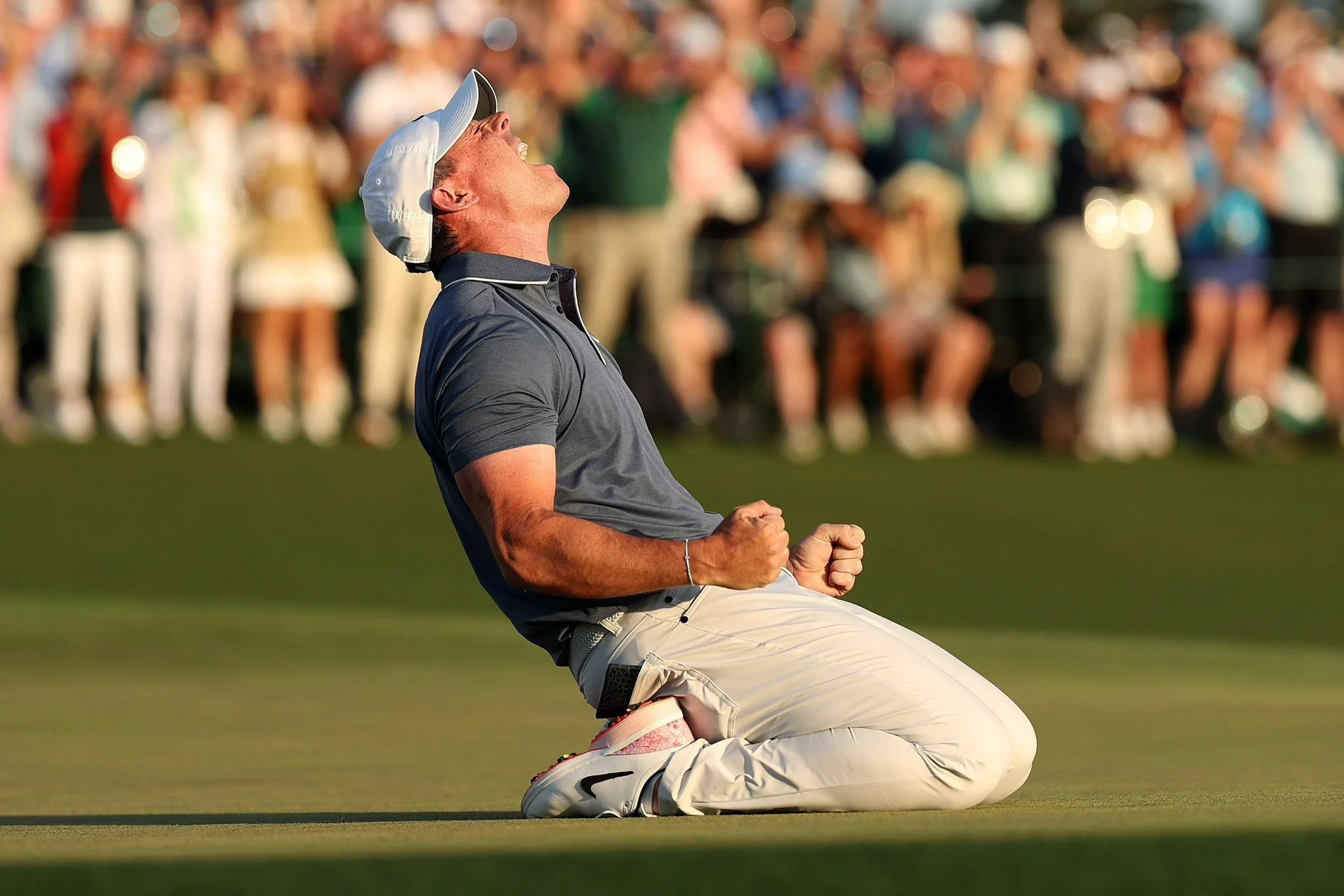
Like many people, I couldn’t help but be glued to Rory McIlroy’s magnificent win at this year’s Masters. However you feel about the game of golf, this was a fascinating human drama, played out on live television – ending with the cliffhanger of all cliffhangers. After nearly a decade of heartbreaking failure and near-misses at Augusta, McIlroy was finally able to slay his inner demons and slip on the winning green jacket.
When he fell to his knees and cried after the last shot, you sensed that the emotion on display was less about him winning – more about release. All the years of hurt, frustration, self-doubt and very public scrutiny – all of it came pouring out of him in one cathartic wave as he finally broke his Augusta hoodoo. This wasn’t just a win. It felt like an exorcism.
Like a lot of people in the world of coaching, I was curious to know what had caused this turnaround in his fortunes. After a little digging, I came to find out that his name is Bob Rotella, a sports psychologist and mental coach. Rotella’s work with elite athletes is based on something deceptively simple: trust. Not in the golf club, or the mechanics of a swing, but in the self. It is his belief that elite performance in any realm is more mental than physical. And that the real battle, the one that matters most, is the one taking place all the time between our ears.
Play to play great
One of Rotella’s mantras that I like is: “Don’t play to not mess up. Play to play great!” That distinction is important, and I suspect it may have helped McIlroy clinch the Masters this year. Because he did mess up a lot (four double bogeys!). But he also made some great shots that put him straight back into contention. Even the best players in the world will hit bad shots, misread greens, and occasionally collapse under pressure.
What sets champions apart isn’t their ability to avoid making mistakes—it’s their ability to quickly forget about them when they do. Says Rotella: “We go to school and it’s all about remembering stuff, whereas in sport, it’s all about forgetting. I think the great ones are really, really good at it.” The trick then is not to avoid making errors, but rather not to ascribe any meaning to them. In Rotella’s words, great players always “commit to the shot” in front of them. It doesn’t mean they’re reckless – it just means they’ve learned to quickly let go of past mistakes.
Be your own inner caddie
Every pro golfer relies on their caddy for advice. But in moments of extreme pressure, the voice that matters most is the one inside your head. One of Rotella’s core philosophies is training athletes to become their own inner caddie by learning to recognize the voice of doubt as it creeps in, and to consciously replace it with clarity, calm, and confidence. Think of it as tuning a radio into a higher frequency. The signal just has to be stronger than the static. Even a small shift —51% positive to 49% negative—can change the outcome of a performance.
While Rotella does not travel with Rory to every course, I’ll bet you his voice does! And we all need that kind of presence: a friend, a coach, a mentor who reminds us of who we are when we forget. The inner caddie says, “Relax, you’ve done this before. You’re ready. You can do this.” It’s not about blind positivity, it’s about training the voice inside your head to work for you, not against you.
Train it, then trust it
In the years when he struggled for a win at Augusta, I don’t imagine that Rory McIlroy stopped practicing. But he may have changed how he practiced. Instead of endlessly tinkering, he practiced under pressure. He visualized success. He rehearsed belief. He created habits not just of skill, but of thought.
We all must do the homework, the training, the daily grind. But then comes the letting go part. The trusting part. I will sometimes say to a client: You’re not underprepared here, you’re under-trusting. You train the skillset, you build the muscle, you rehearse the mindset—and then, when the moment comes, you also have to let go. There comes a point when too much training only gets in the way.
Playing the long game
If there’s a final lesson from Rotella’s coaching that sticks with me, it’s that winning is really all about playing the long game. Yes, there will be bad days, loss of form, but it’s about refusing to let them define you. McIlroy didn’t suddenly become immune to pressure or mental lapses. But I think what changed was how he responded to setbacks. When a shot went sideways, he didn’t panic or go in on himself. He had a mental framework to fall back on—a way to reset, refocus, and re-engage without spiraling into self-doubt.
Rotella calls this “trusting your swing,” but it’s really about trusting yourself. Over time, this builds resilience – mental toughness – which is one of the hallmarks of great champions, and also great people. Playing the long game means refusing to catastrophize, or ascribe greater meaning to our mistakes than they deserve.
That’s the psychology of champions—not perfection, but persistence.