
The Lost Art of Conversation
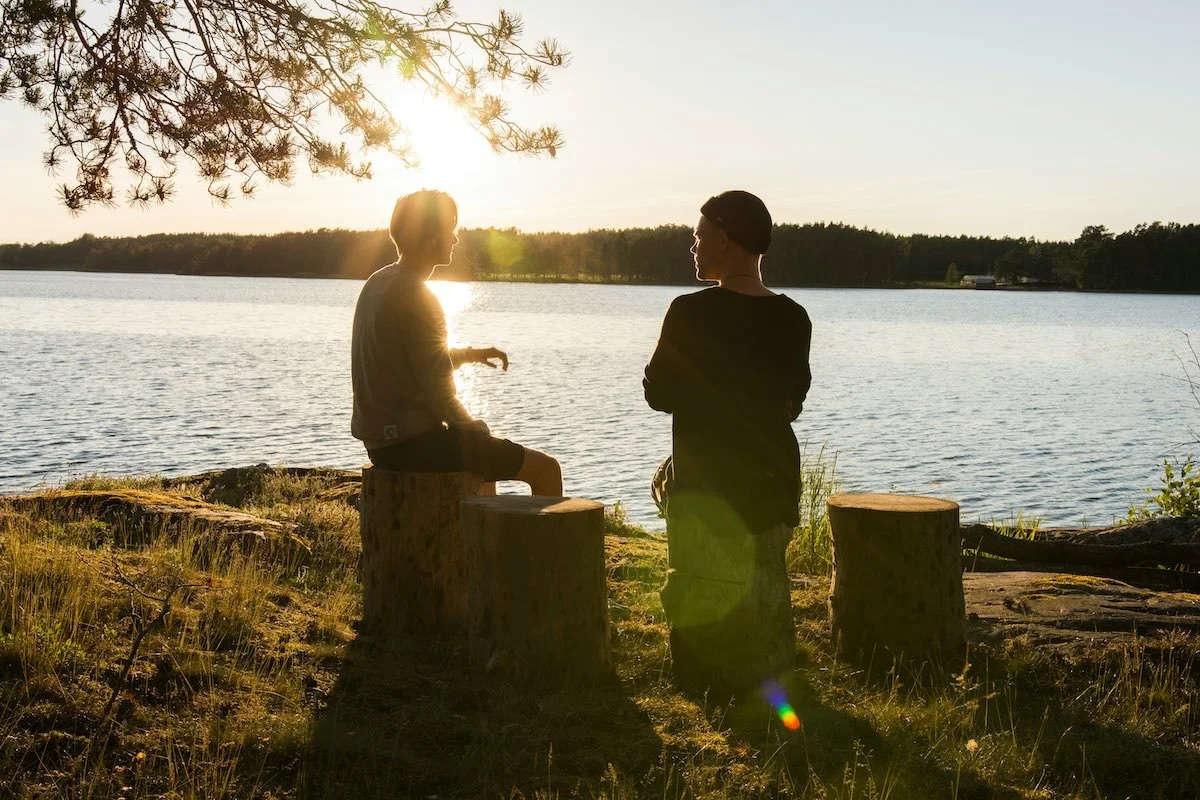
Lately, I’ve been wondering, “Is it just me, or has something been lost?” To look at our world today—on television, in politics, on social media—is to see a landscape flooded with words but starved of real conversation. Everyone is talking, but nobody, it seems, is listening.
Debates have become performances in search of a knockout blow. Dialogue has been replaced by tightly scripted 30-second sound bites in search of clicks. In an age of constant connection, we seem to be losing the very thing that connects us most as human beings: the ability to simply sit down and talk to one another.
According to research, the average adult in the U.S. now spends nearly seven hours per day consuming digital media. Seven hours! This shift has altered not just how we communicate but the very nature of these interactions. Short, transactional exchanges have replaced natural human dialogue in real-time. In place of phone calls, we text. Instead of meetings, we have Slack. Instead of debating ideas over coffee, we “comment” on posts.
Of course, technology isn’t solely to blame for this shift. Social norms have evolved in a way that is hard to keep up. And in these politically charged times, even casual conversation can feel risky – like navigating a minefield. Despite these changes, deep, meaningful conversation remains essential to our wellbeing, and to human connection in general. How then, do we talk to one another?
Presence is required
Real conversation begins with presence. Your presence. That means putting away the phone—and not just turning it facedown while checking every ping. When we are distracted, even subtly so, it sends the message that the person across from us is only partially worth our attention. Being fully present also means embracing the natural pauses in dialogue. Many of us fear silence so much that we rush to fill it up with talk, talk, talk. But natural pauses in conversation allow for deeper reflection, giving others time and space to think before responding. Nobody likes to feel rushed.
Are we really listening to what is said, or just waiting our turn to talk? Because real listening—listening to understand rather than to reply—is a radical act of empathy in a distracted world. It signals respect. It invites vulnerability and trust. Presence doesn’t demand perfection. It only asks that we show up fully, authentically, even if we don’t quite know what to say next.
A little preparation goes a long way
We often assume that good conversation should come naturally—but the truth is, the best communicators prepare. Whether you’re heading into a one-on-one with a colleague, a dinner with a friend you haven’t seen in a while, or a high-stakes presentation, taking a few minutes beforehand to think about what matters can make all the difference. What is the purpose of this exchange? What do you want to understand, clarify, or convey? Are there questions you’ve been meaning to ask? Topics to avoid? People feel it when you’ve made room for them in your mind before the meeting even begins. Preparation isn’t about scripting every word—it’s about setting an intention.
In her new book, Talk: The Science of Conversation and The Art of Being Ourselves, Alison Wood Brooks offers tips on how to have better conversations. Brooks, a behavioral scientist at Harvard Business School, has spent years studying what makes conversations go well – or go sideways. Her core idea is that we need to give conversations the same forethought we give to presentations or emails. A common blind spot, especially among extroverted leaders, is to assume that because you’re good at talking, you must be good at connecting. But as Brooks makes clear, that’s often a dangerous assumption. “The people who need to prepare the most,” she writes, “are often the least likely to do it.” In her book, she offers a simple but powerful framework to guide better conversations.
The TALK Framework
T: Topics matter – Choose and manage them intentionally
A: Ask more questions – Especially follow-ups
L: Levity – Use appropriate humor to build rapport
K: Kindness – Make it easy for the other person to talk
Brooks’ research shows that even small shifts in how we approach conversations – with some basic prepping, asking better questions, making room for levity – can yield outsized results. Here are just a few of the prompts I’ve adapted from her work for executive clients:
– What’s one thoughtful question I can ask that they’ll enjoy answering?
– What do I hope they walk away feeling?
– What’s the tone I want to set here? Collaborative, curious, supportive?
– Have I tried, “Say more” or “Tell me more about that.”
– Where might I need to be quiet and just listen?
The art of conversation isn’t dead, but it is endangered. In a world that feels increasingly disconnected, rushed, and filtered through screens, the simple act of slowing down to talk to someone—and truly listen—can feel radical. Side-by-side conversations (walking, driving) often feel more casual and lead to greater openness than face-to-face exchanges across a desk. The timing matters too – a breakfast meeting typically yields different results than a late afternoon discussion.
When we show up, prepare with intention, and treat conversation as a shared experience rather than a solo act, then we open the door to real human connection. A good conversation is not something you have, but something you build – moment by moment – with curiosity, humility, and attention.
As Maya Angelou famously said, “People will forget what you said, people will forget what you did, but people will never forget how you made them feel.” That feeling—of being seen, heard, and valued—is the soul of meaningful conversation.