Start Climbing
In his bestselling memoir, Kitchen Confidential, Anthony Bourdain wrote: “I understand there's a guy inside of me who wants to lay in bed, smoke weed all day, and watch cartoons and old movies. My whole life is a series of stratagems to avoid, and outwit that guy.” It’s a clever line, and also a little heartbreaking, given what we know about the circumstances surrounding his tragic death. Here was a man who was hugely successful in life, driven by fierce creative energy – a chef, author and filmmaker – and even he was in a constant state of battle with his own inertia.
Most people can relate. Whether it’s committing words to a blank page, asking your boss for a raise, or simply tackling the mess in your garage – there will always arise a confederacy of excuses for why now may be the wrong moment to tackle such a risky endeavor. This is not laziness. It is not a character flaw. It is, in fact, a near-universal feature of the human experience, and understanding it may be the most important thing you can do for your creative life, your professional ambitions, and your sense of self.
Author Steven Pressfield called this powerful force Resistance: a single word he uses to describe every form of doubt, avoidance, procrastination and self-sabotage that stands between us and what we most want to do. For some people it looks like reason: it’s just not practical right now. For others, it manifests as perfectionism: the work isn’t ready, we need more runway, the version in my head will never match up to the physical reality. What undergirds all of these is fear. The fear of failure, fear of risk. Even fear of success. And the more important an action or calling is to us, the more resistance we will likely feel towards it.
So what are some strategems to avoid and outwit that guy?
Treat Yourself like a Professional
Pressfield is a writer, and he draws a sharp distinction between what he views as the amateur and the professional writer. The amateur waits for inspiration to strike, for the right mood, the right moment. The conditions always have to be perfect. The professional, by contrast, shows up whether he feels like it or not. Professionals do the work. They finish things. They deliver. No different than a plumber, a surgeon, or a roofer doing a job. A surgeon does not cancel an operation because she is feeling tired, or uninspired. In other words, there is a professional standard to which they hold themselves accountable, not because someone is looking over their shoulder, but because to do otherwise would be to diminish themselves. A professional values their time and the time of others, and protects it accordingly.
Resistance as a Roadmap
Nobody ever had resistance to eating ice-cream. And nobody procrastinates around things that don’t matter to them. Rather, resistance is proportional to the value we place on things; and the stronger the pull to avoid doing something, the more likely it is something significant that awaits on the other side. When we know this, it reframes the whole experience.
If you’re carrying around a heavy or stuck feeling, it’s usually a pretty good indication that there is something there that needs addressing. Think of Resistance as a compass. Maybe it’s a conversation that is long overdue, a boundary that needs asserting, a career that needs a good hard look. Whatever you are avoiding is almost certainly the work you most need to do. As the saying goes, what you resist persists – and guaranteed you will feel better once you stop walking around it.
Make the First Step Embarrassingly Small
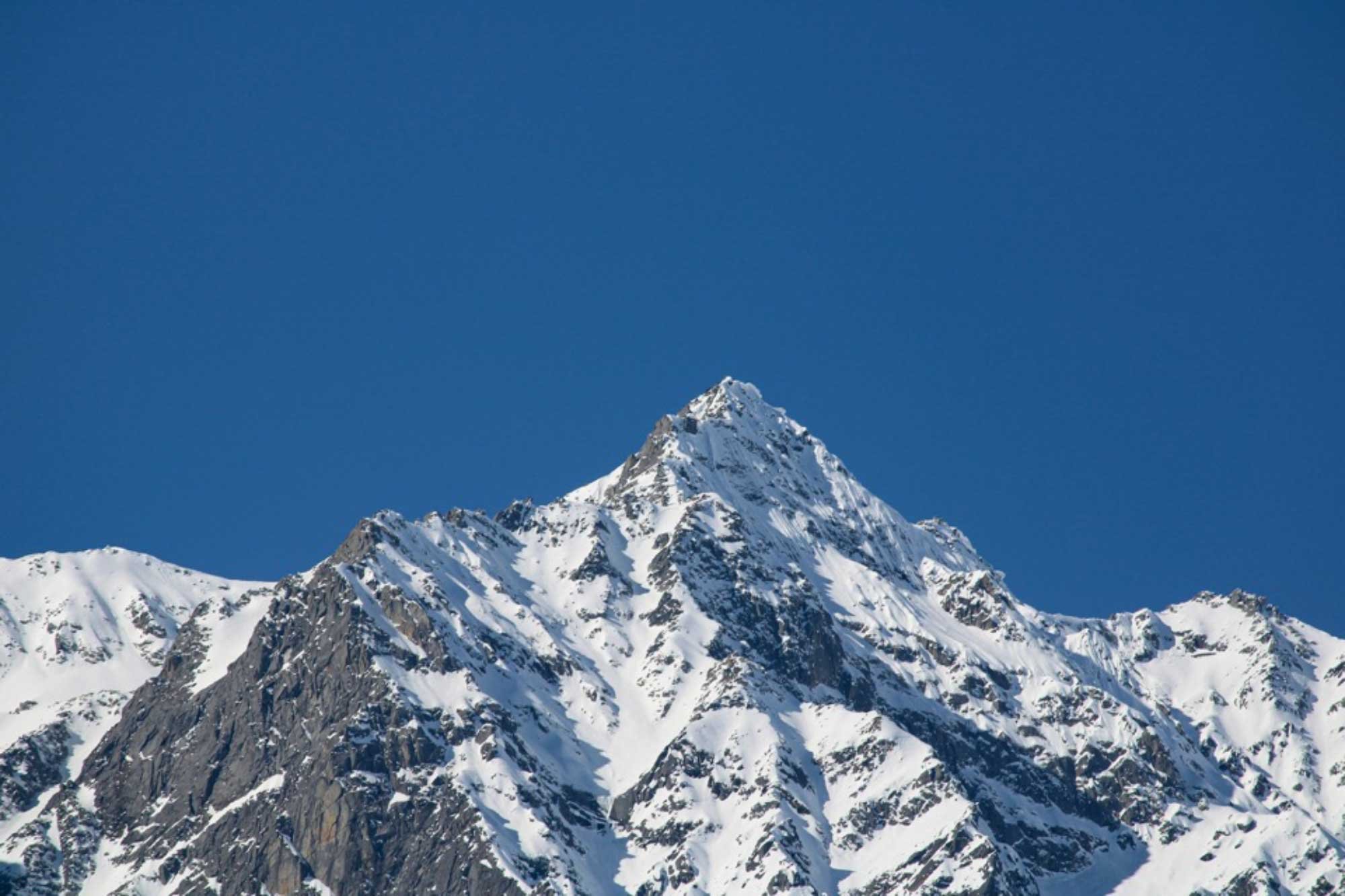
One reason that Resistance so often wins is because we look at the whole mountain instead of the first step. We gaze up at the summit and the distance between here and there is so vast it becomes paralyzing. The scale of it sends us straight back to the couch. In his book Atomic Habits, author James Clear offers a useful corrective: ask yourself what is the single smallest unit of action I can take, one that is simply impossible to fail at? Set the bar low. Then lower it still. Because even the smallest action taken disrupts the inertia that Resistance feeds off.
Maybe you want to launch a new initiative, but the scope feels unmanageable. So narrow it. One week to produce something real. Resistance feeds on open space - on unbounded timelines and vague definitions of done. A constraint shrinks the territory it has to work with. The same is true of any creative work. Maybe you'd like to write a book, but can't commit to it. Then try writing a single paragraph, which will almost certainly become a page. The goal is not to think smaller. It is to lower the activation energy so dramatically that starting becomes easier than avoidance. For myself, I always find that inspiration comes while I'm writing, and never before.
Resistance, as Anthony Bourdain knew, does not ever go away. But it can be a reliable signal that something meaningful is waiting on the other side of our temporary discomfort. You do not have to vanquish Resistance to scale a mountain. You simply have to move in spite of it. The mountain will still be there tomorrow. So will you. Start climbing.